

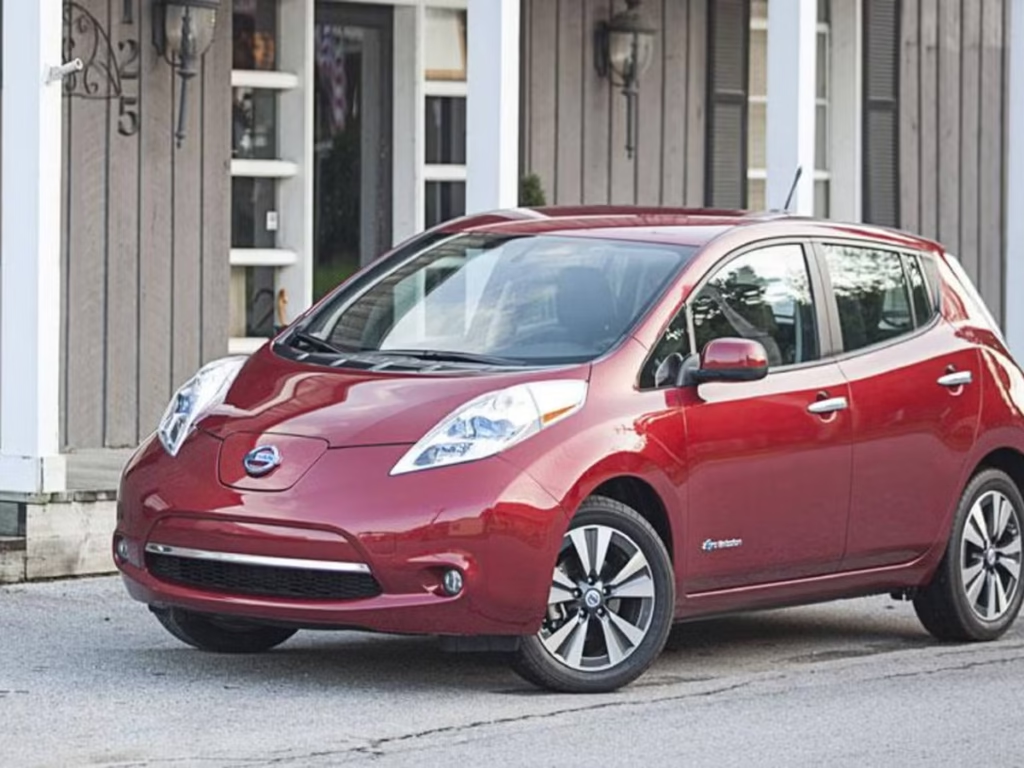
Over the last decade, the Nissan Leaf became the most popular electric car in Sri Lanka, especially after tax concessions briefly made EVs affordable for the middle class. Yet behind the promise of clean, low‑cost driving, thousands of Leaf owners now face a series of practical problems that governments and manufacturers have been slow to address.
Lack of after‑sales service and support
Most Nissan Leaf cars in Sri Lanka were imported as reconditioned or “zero mileage” used vehicles from Japan and the UK, not through a strong official dealer network. As a result, owners struggle to find proper service, diagnostics, and software support for critical systems such as the battery and electronics.
Many Japanese‑domestic Leaf units still run with Japanese‑only navigation and infotainment, and owners cannot officially change the language or use connected services locally. Independent garages try to fill the gap, but without full technical backing from Nissan, repair quality and access to original parts remain uncertain.
Battery degradation and replacement crisis
The heart of an EV is its traction battery, and this is where Sri Lankan Leaf owners face their biggest headache. Early Leaf models are now losing range due to natural battery degradation, turning cars that once did over 150 km per charge into vehicles that may manage only 60–80 km in real‑world conditions.
For years, Nissan did not directly supply replacement Leaf batteries for Sri Lanka, leaving owners dependent on a small number of private importers and specialists. Even when available, a brand‑new original battery can cost over one million rupees, a figure that many owners simply cannot afford, effectively “stranding” otherwise perfectly good cars.
Weak and unreliable charging infrastructure
Public charging infrastructure remains thin, fragmented, and unreliable across the island. Outside a few major urban areas, fast DC chargers are rare, and many available points are slow AC chargers that require long waiting times. Earlier industry estimates spoke of only a few dozen fast chargers for the entire country, most owned by private investors rather than forming part of a coordinated national network.
On top of scarcity, Sri Lanka’s unstable power grid and frequent power cuts disrupt charging, especially during peak evening hours. Owners who depend on overnight home charging can wake up to half‑charged batteries if a power outage occurs, undermining the basic convenience that EVs are supposed to offer.
Policy uncertainty and tax shocks
Government policy towards EVs has been inconsistent, swinging between incentives and heavy duties within a few years. In some periods, tax reductions triggered a flood of Nissan Leaf imports; at other times, sudden duty increases on used electric cars, or proposals to sharply raise excise on Leaf imports, created shock and confusion in the market.
These shifts damaged confidence among both buyers and dealers, making long‑term planning impossible and discouraging investment in charging networks, service centers, and parts stocks. Owners who bought cars under a favorable tax regime often feel abandoned when later policies and support structures do not protect the value or usability of their vehicles.
Are things improving?
There are signs of gradual progress. Some local companies now offer genuine battery replacement services for the Leaf, and EV enthusiast groups share knowledge and technical solutions among owners. The Government has also begun drafting regulations for EV charging stations and discussing reforms to electricity tariffs that could encourage off‑peak charging and better grid management.
However, for many existing Leaf owners the reality is still difficult: limited range from aging batteries, anxiety about finding a working charger, and uncertainty about future policy and manufacturer support. If Sri Lanka wants a truly sustainable EV transition, it must treat these early Leaf users not as a forgotten experiment, but as pioneers whose problems need